
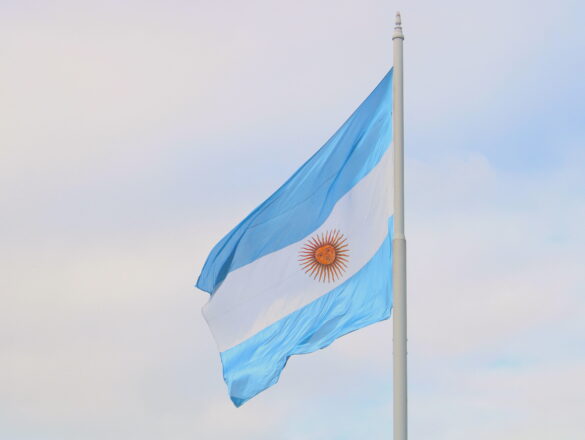
 Lindsay
 Planning your first trip to Buenos Aires and don’t know where to start?
I spent a few unforgettable days exploring Argentina’s capital, and it completely blew my expectations out of the water. One minute you’re strolling past grand European architecture; the next, you’re taking in world-class street art, lively markets, and incredible food. Add in a shared, local obsession with football, and I felt right at home. Buenos Aires is rich in history, culture, and character, and every street has a story.
If you’re planning 3 days in Buenos Aires, this guide will help you make the most of your trip. But before we dive into the itinerary, let me tell you how I ended up here in the first place…
How I Ended Up in South America
A few months back, I was sitting at my desk at the travel agency where I work when my manager appeared around midday with a dead-pan look on her face. Uh-oh. What had I done wrong? Had I missed a booking? Sent a client to the wrong continent?
Instead, she slammed a piece of paper down on my desk and shouted, “You’ve won!” before breaking into a massive smile.
Across the top in bold letters: SOUTH AMERICA!
What???? I’d won a trip to South America?!
This continent had been at the top of my bucket list for as long as I could remember, and getting the chance to go felt completely surreal. I was over the moon—and, if I’m being honest, a little nervous. Like many people, I’d grown up hearing stories about South America being unsafe, but I was determined to experience it for myself rather than judge it by the headlines.
It was going to be a long journey, so sit back, turn up your favourite J Balvin tunes, and join me as I explore this beautiful part of the world and tick off continent number five!
Are you subscribed?
Before we dive into my post today on 3 days in Buenos Aires, make sure you’re subscribed so you never miss a new blog update. Subscribing means you’ll be the first to hear about upcoming posts, travel news, and the occasional newsletter (when I have time!). You can also follow along on Instagram, Facebook, and Twitter/X for real-time updates from my adventures. Come explore the globe with me, one day trip or weekend getaway at a time!
This post may contain affiliate links, which means that when you click on a product I recommend through my links, I may earn a small commission at no cost to you. For more information, click here to read my Privacy Policy.
New Adventures (And Absolute Passport Panic)
I was up early and buzzing to head off with a group of travel agents from around Australia. We were flying with LATAM Airways, South America’s largest airline, and met up at Sydney Airport just before 9:00 a.m. to check in together.
That’s when things got interesting. And by interesting, I mean ABSOLUTELY TERRIFYING.
Everyone else in the group held Australian passports. I had a British one. On top of that, I’m on a permanent residency visa, and because I’d recently been issued a new passport, my visa was still linked to my old one. Somewhere in the airline system, nothing was lining up. They couldn’t find me. Then, they told me I was showing up as an Australian citizen instead of British, which only added to the chaos.
So, there I was, standing at the check-in desk with a group of girls I’d only just met, quietly thinking: I am actually about to get sent home before the trip has even started. It was a solid 15 minutes of pure, unadulterated stress. Fortunately, a LATAM staff member stepped in, made a few phone calls, and untangled the mess.
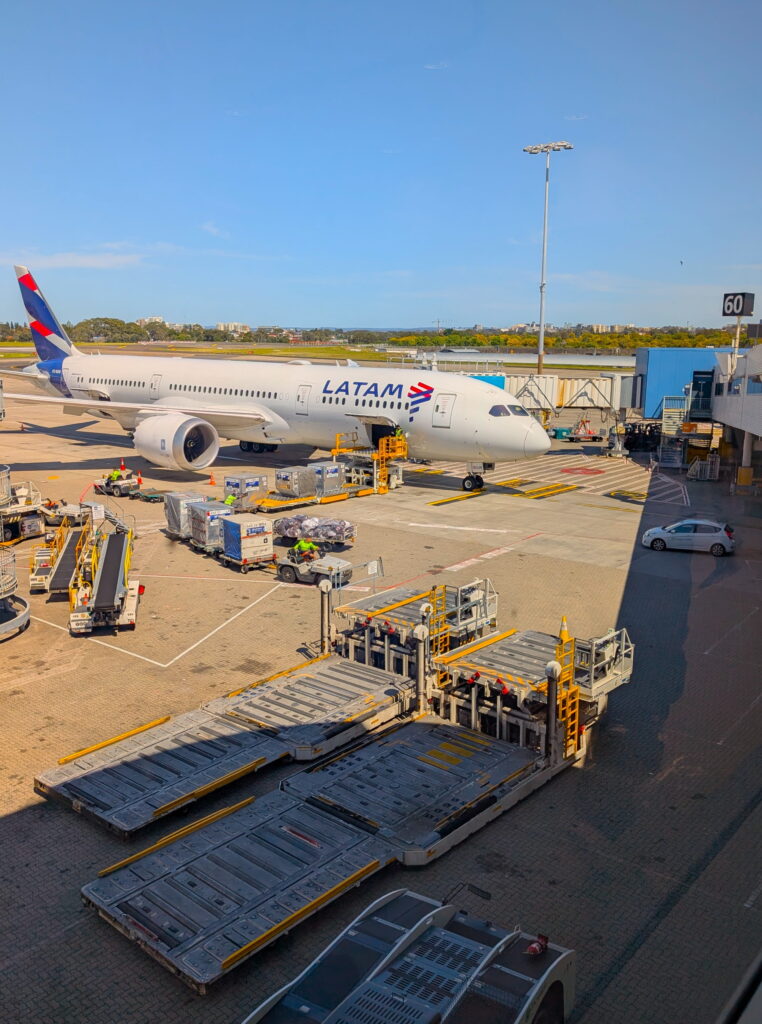

Boarding pass in hand, the relief was indescribable.
Our route to Buenos Aires went via Santiago, Chile. After hours of movies, snacks, half-sleeping, and general long-haul exhaustion across the Pacific, we landed in Santiago for an 8-hour layover. From there, it was a short final flight into Argentina, which included flying directly over the Andes Mountains, a view that was completely incredible!
Even in my zombie-like state, catching my first glimpses of the city from the transfer window was unforgettable: wide boulevards, glowing lights, and a distinct atmosphere completely different from anywhere I’d been before. By the time we checked into our hotel, it was past 1:00 a.m. I have never been so ready for a bed.
Day One: Waking Up in a New Continent
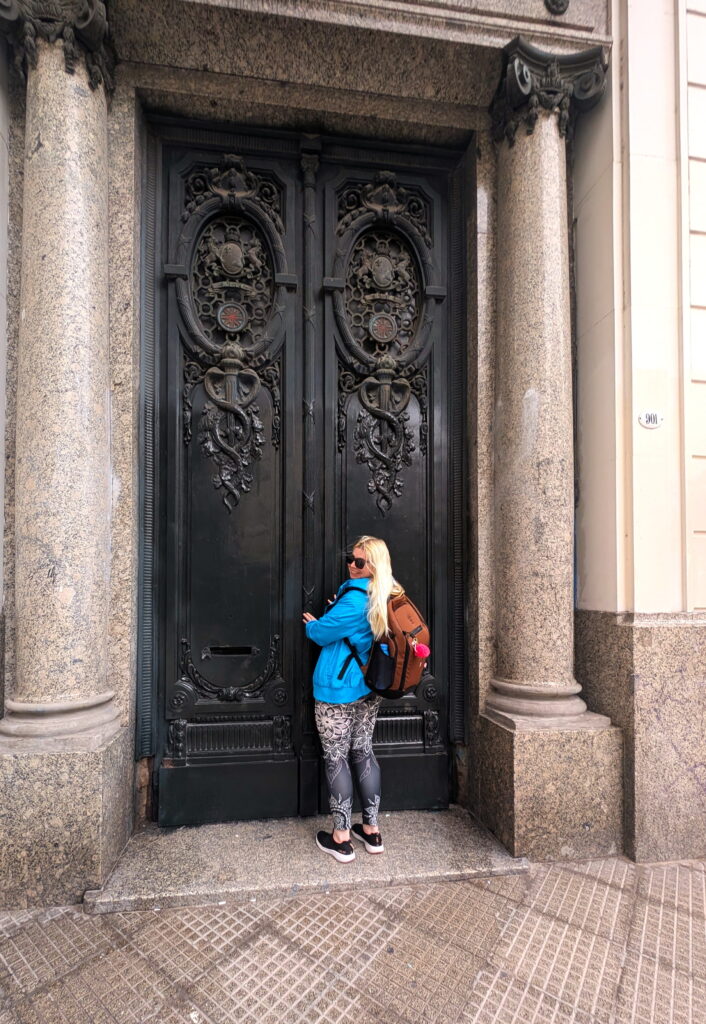
The next morning, I dragged myself out of bed and was tired for all of three minutes before reality hit: I was finally in South America!
At breakfast, we met Lorenzo, our tour guide. We quickly realised he’d be with us for most of the trip, which I loved, as sticking with the same guide lets you really bond. Before hitting the streets, we got a crash course in mate, the earthy, traditional herbal tea that is practically a religion across South America. It’s definitely an acquired taste, but I actually didn’t mind it!
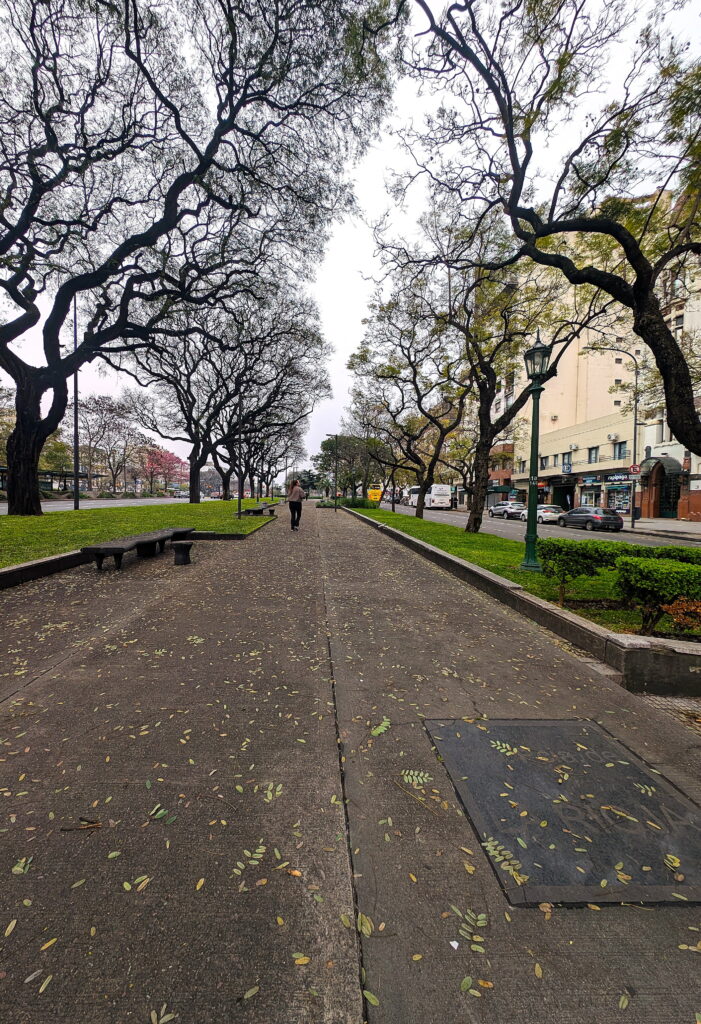
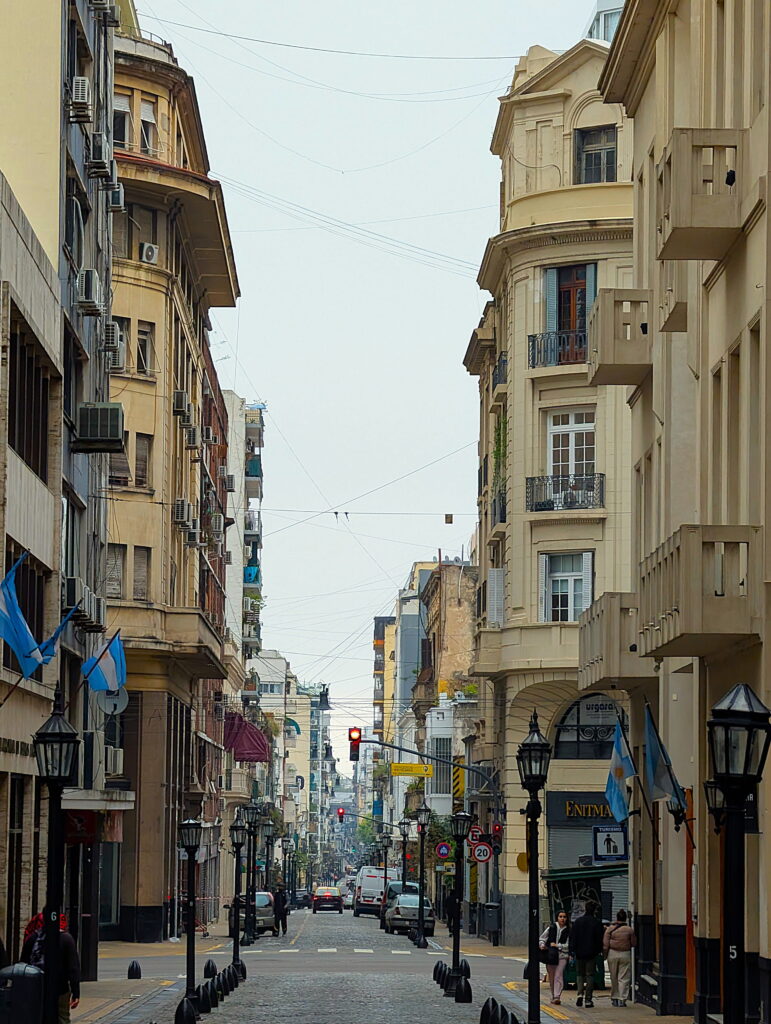
Within minutes, we were wandering through the back streets just a short walk from Avenida de Mayo, officially kicking off our 3 days in Buenos Aires. The very first thing that struck me was how distinctly European it felt. With its grand boulevards and cream-colored buildings topped with blue-grey roofs, it genuinely felt like walking through Paris.
Meeting Evita & The Architecture of Avenida de Mayo
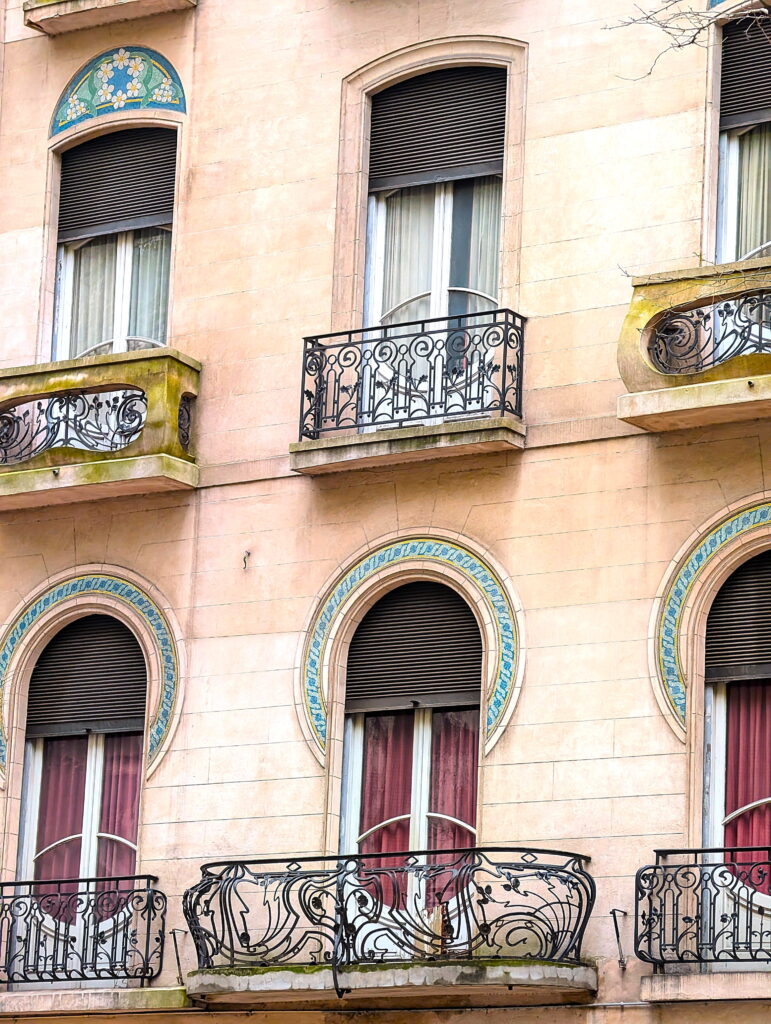
As we turned onto Avenida de Mayo, I completely fell for the architecture. There were beautiful Art Nouveau details everywhere, and as someone who loves design, I was in my absolute element.
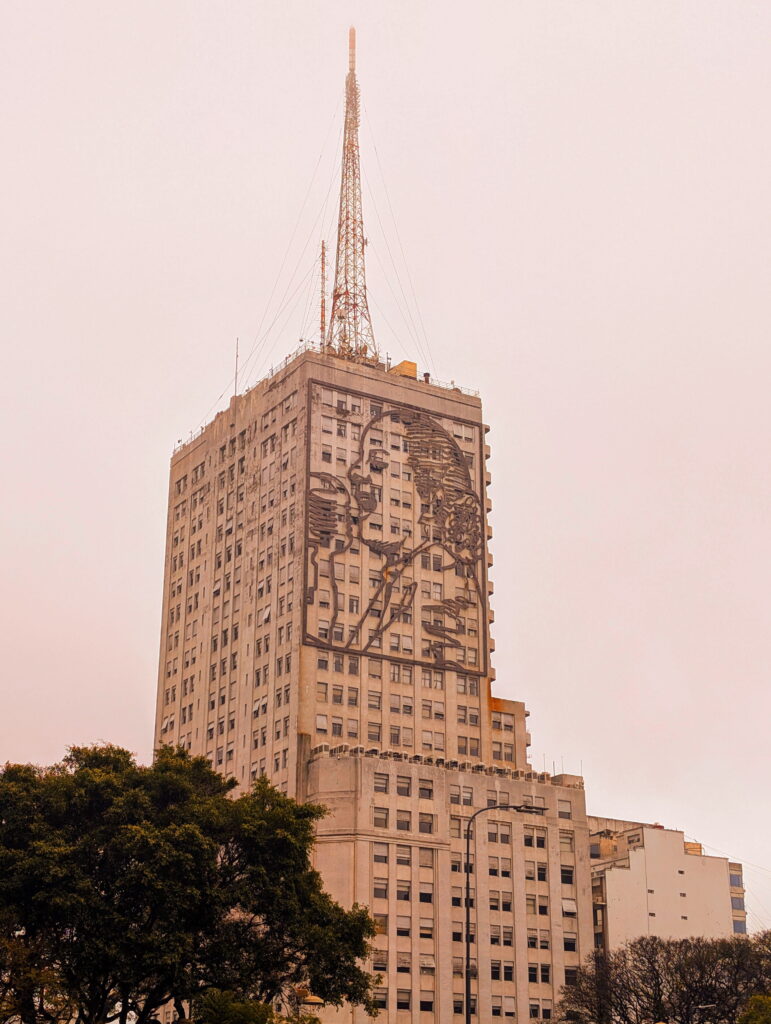
Further along, we passed the Ministry of Health building, featuring a massive steel outline mural of Eva Perón (Evita). Lorenzo explained her complicated legacy. Originally an actress before marrying President Juan Perón, she remains one of Argentina’s most fiercely debated figures, adored by many for her social justice work and viewed critically by others.
The Power of the Mothers of Plaza de Mayo
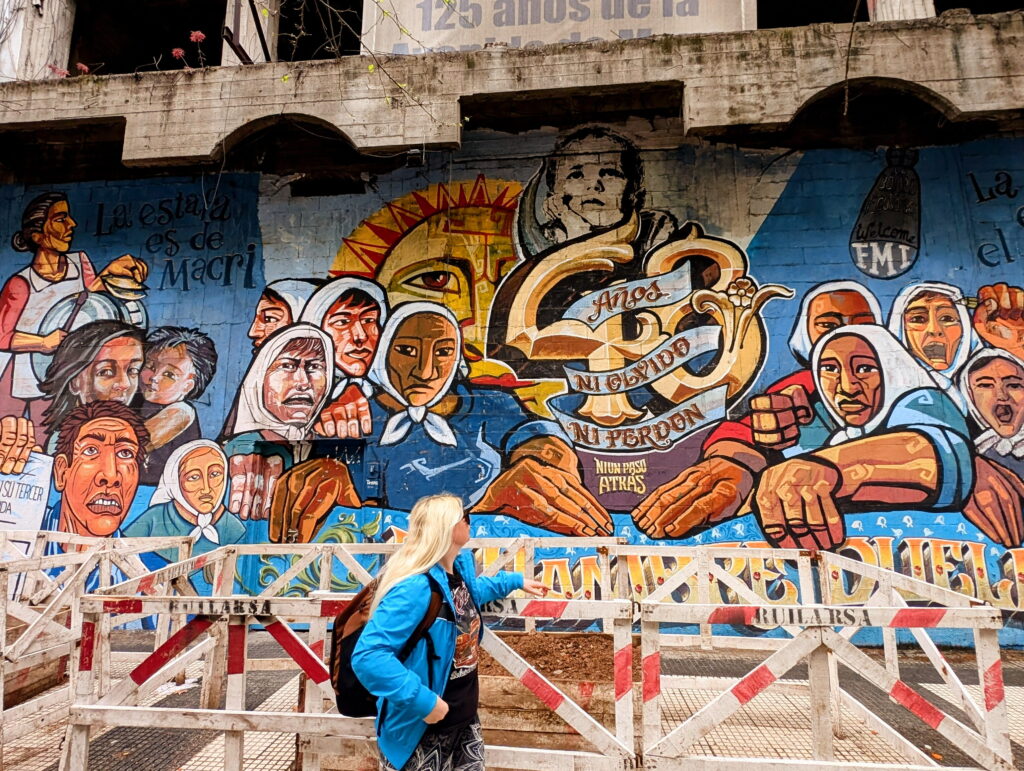
Halfway down the boulevard, we stopped at a powerful street mural titled Ni olvido ni perdón (“Neither forgetting nor forgiving”). It depicted the Mothers of Plaza de Mayo wearing their iconic white headscarves. During Argentina’s dark military dictatorship (1976–1983), thousands of people vanished; these mothers began gathering to protest for answers, and they still meet today outside the Casa Rosada as an unshakeable symbol of justice. Standing there, you can really feel the weight of that history.
Dante’s Inferno at Palacio Barolo
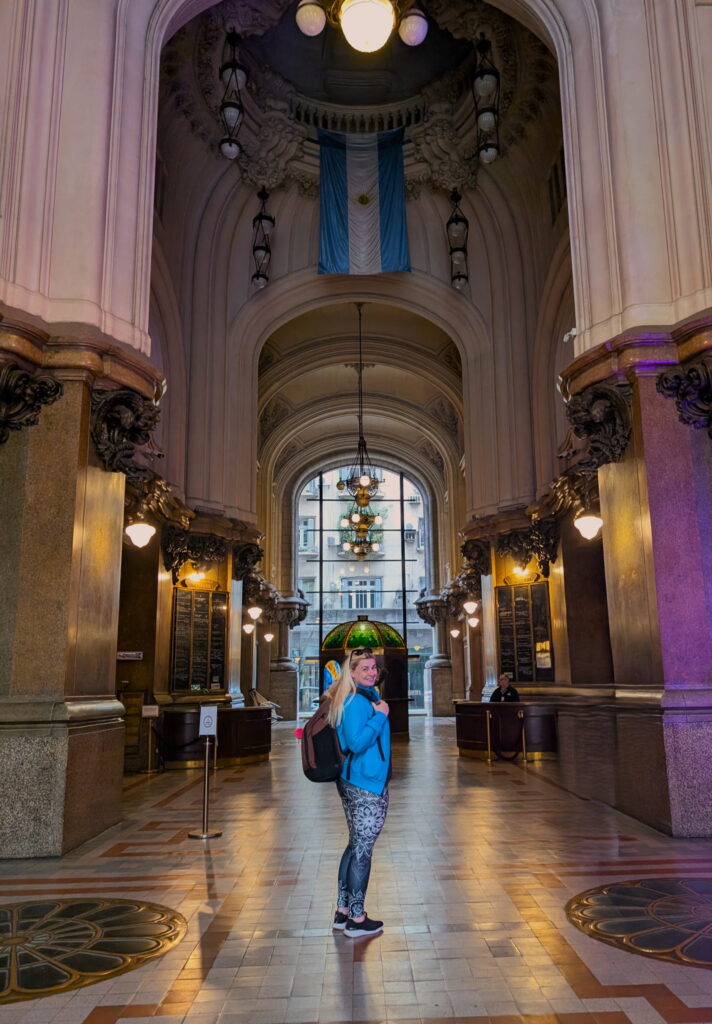
Next up was one of Buenos Aires’ most iconic landmarks: Palacio Barolo. Completed in 1923, it was once the tallest building in South America. The wildest part? The entire building was inspired by Dante’s Divine Comedy, designed to symbolically move from Hell at the bottom, through Purgatory, and finally to Heaven at the top.
We only stepped into the lobby, but with its soaring ceilings and ornate details, it felt more like a cathedral than an office block. I honestly wouldn’t mind working there—even if it meant ending up in “Purgatory” Monday through Friday!
Political Graffiti at Plaza del Congreso
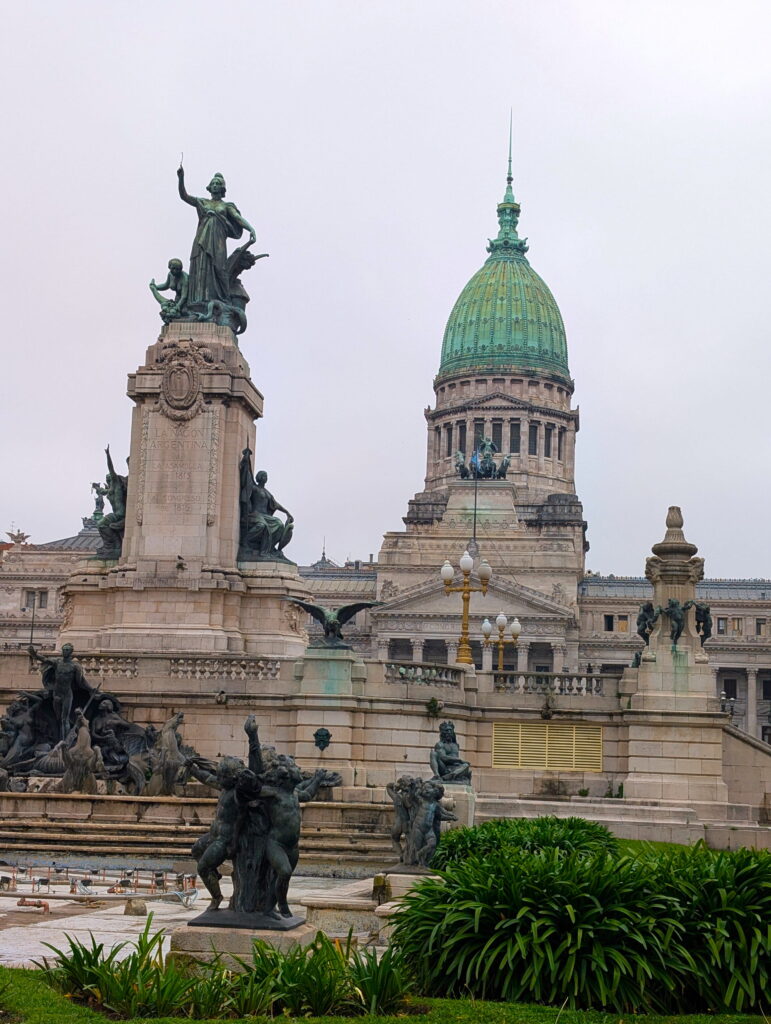
From Palacio Barolo, we reached Plaza del Congreso. The National Congress building immediately grabbed my attention with its massive green dome and grand façade (heavily inspired by the US Capitol). What surprised me even more was the intense political graffiti and protest boards surrounding it. Combined with the grey sky overhead, it gave the square a heavy, highly charged atmosphere.
By 10:00 a.m., the clock struck, and the entire group decided coffee was an urgent priority. Lorenzo pointed out El Molino, a stunning historic café on the corner, complete with a little windmill and classic Parisian styling. It looked exactly like somewhere I’d happily lose an entire afternoon.
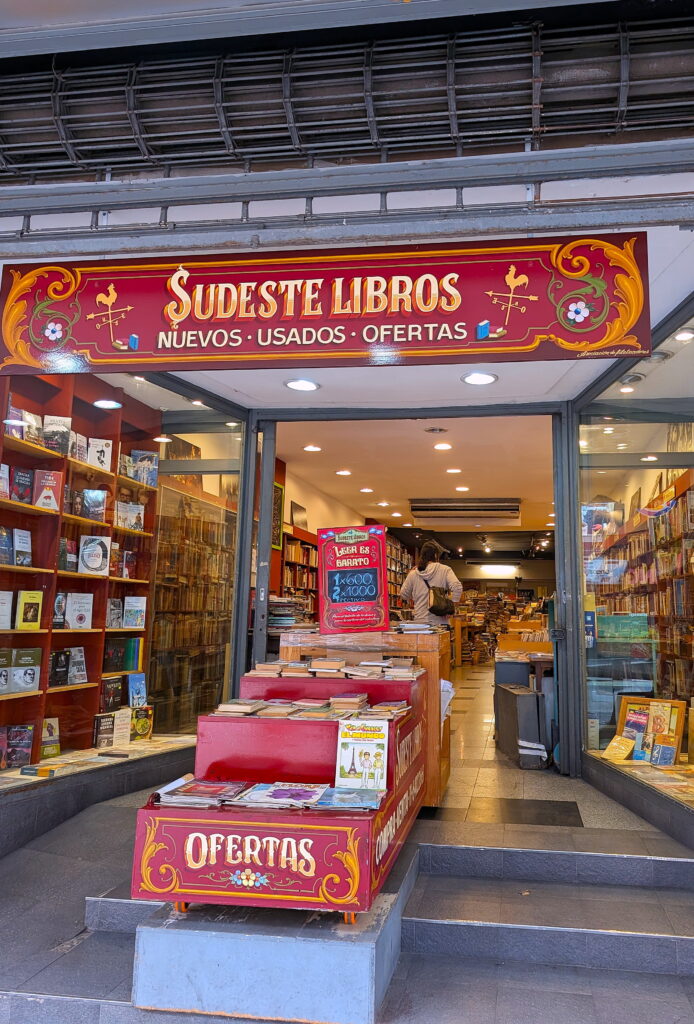
Instead, we pushed on toward Avenida Corrientes. One of the girls in our group, Kate, mentioned how much she loved bookstores. I’m the exact same way. So, when I spotted Siete Libros, a second-hand bookstore across the road, we abandoned all self-control and bolted inside. The front was neat and organised, but the back had that wonderfully chaotic energy that all the best bookshops have.
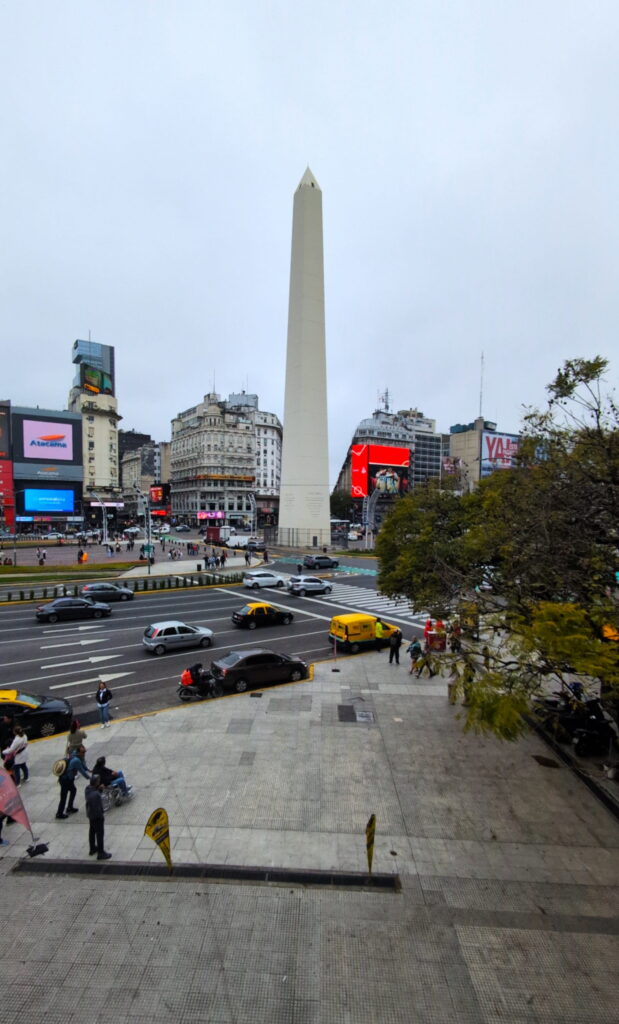
After a quick browse and a mini lesson on Argentine history via one enormous encyclopedia, we stepped back outside. Theatres lined the neon-lit streets ahead of us, leading us straight toward the undisputed star of the show: Plaza de la República and Buenos Aires’ famous Obelisk.
Facing the Obelisk & My Football Nerd Moment
As we stepped into Plaza de la República, I had a massive football nerd moment. When Argentina won the 2022 World Cup in Qatar, I watched the footage back home in sheer amazement and envy as millions of ecstatic fans flooded this exact square, hanging out of windows, climbing up lampposts, and celebrating a historic victory. As an England fan, it made me think wistfully: maybe one day… it’s coming home! Football here isn’t just a sport; it’s a religion, and Lionel Messi’s face is plastered absolutely everywhere.
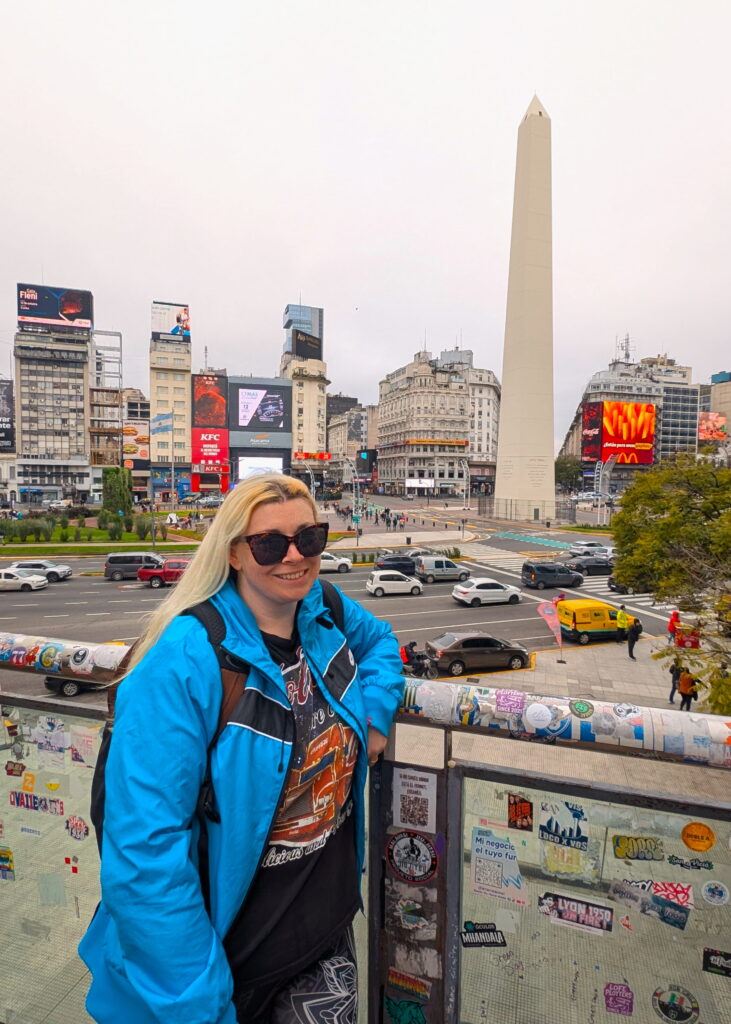
Lorenzo told us the massive Obelisk was built in 1936 on the exact spot where the Argentine flag was first raised. While locals didn’t love it at first, it has since become the ultimate symbol of the city. As Lorenzo put it: “When we are happy, we go to the Obelisk. When we are unhappy, we go to the Obelisk.”
Then came a brilliant, unexpected travel tip from our guide: the absolute best view of the square is actually from a viewing platform situated directly on top of a nearby police station! It felt a bit unusual stepping up there, but it makes total sense in a plaza that chaotic.
Insulting our Guide (Accidentally)
By this point, we really should have been heading straight for coffee. We were trying, but Buenos Aires is so full of incredible sights that we kept getting completely sidetracked.
I mentioned to Lorenzo that I’d been obsessed with an Argentine hype song back home called “Pa La Selección” by La T y La M. I proudly pulled out my phone and played it for him. His face said everything. I was convinced this track would be blasting from every car window in the country, but I quickly realised nobody was playing it except me.
One of the girls leaned over and asked, “Did you just insult our guide?”
“I think I did,” I replied. “Or at least his ears.” To his credit, Lorenzo didn’t hold my questionable music taste against me.
The Teatro Colón & A Surprising Football Encounter
We continued our slow march toward caffeine, passing the spectacular Teatro Colón, Buenos Aires’ world-famous opera house. I had actually booked a client here the year before, and she raved that it was the absolute highlight of her trip. We didn’t have time to go inside, but even the exterior was stunning, with intricate musical motifs woven directly into the grand stonework.
As we looped back past the Obelisk to cross the avenue, my jaw hit the floor. Walking casually through the crowd was a local man wearing a worn, vintage England football shirt with Ince, Number 8, on the back.
Growing up in the UK, you’re often raised to believe that relations between England and Argentina remain deeply fractured after the Falklands War in 1982, with football matches always framed as high-stakes, bitter clashes. Seeing an England kit worn so casually in the heart of the capital completely shattered that preconception. It made me realise that sometimes, football fans really are just football fans, no matter the history.
The Art of Chocolate at Confitería Ideal
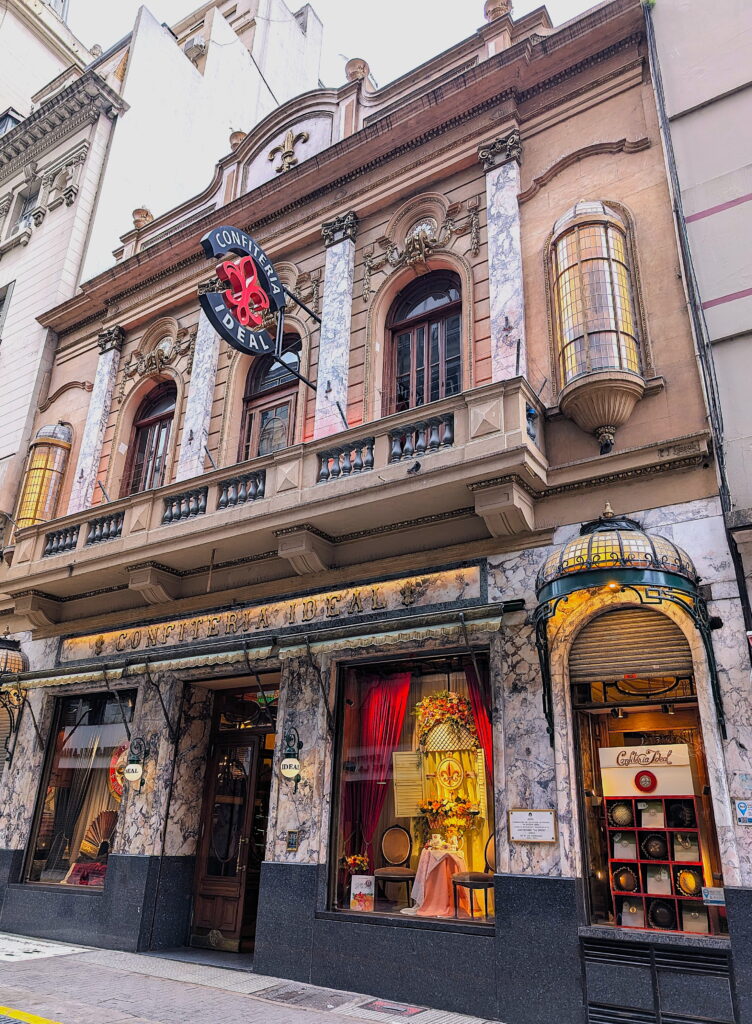
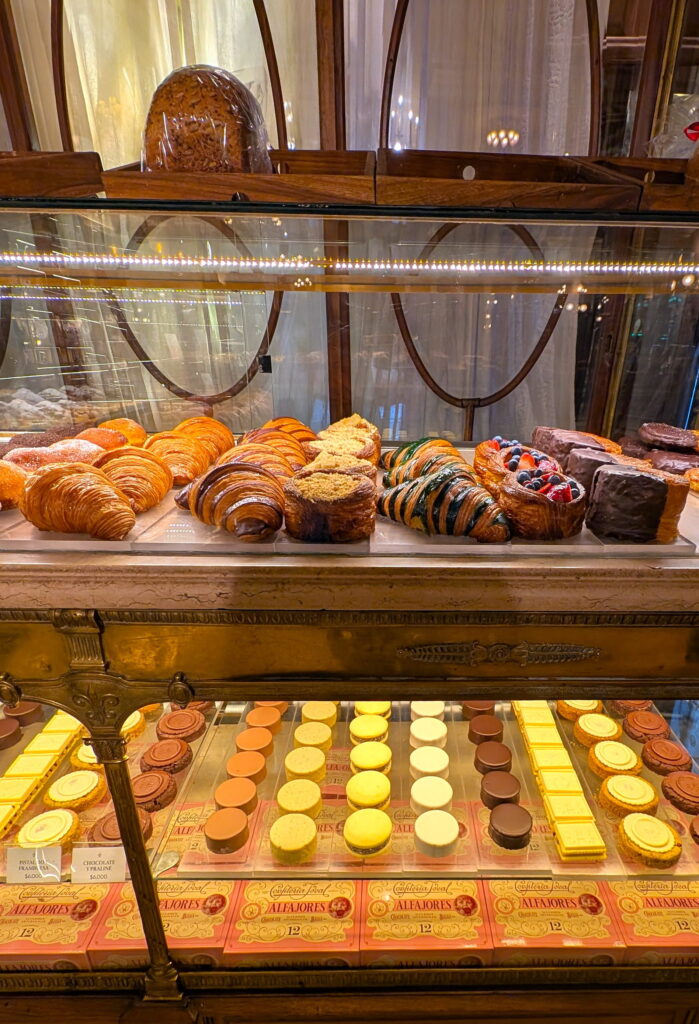
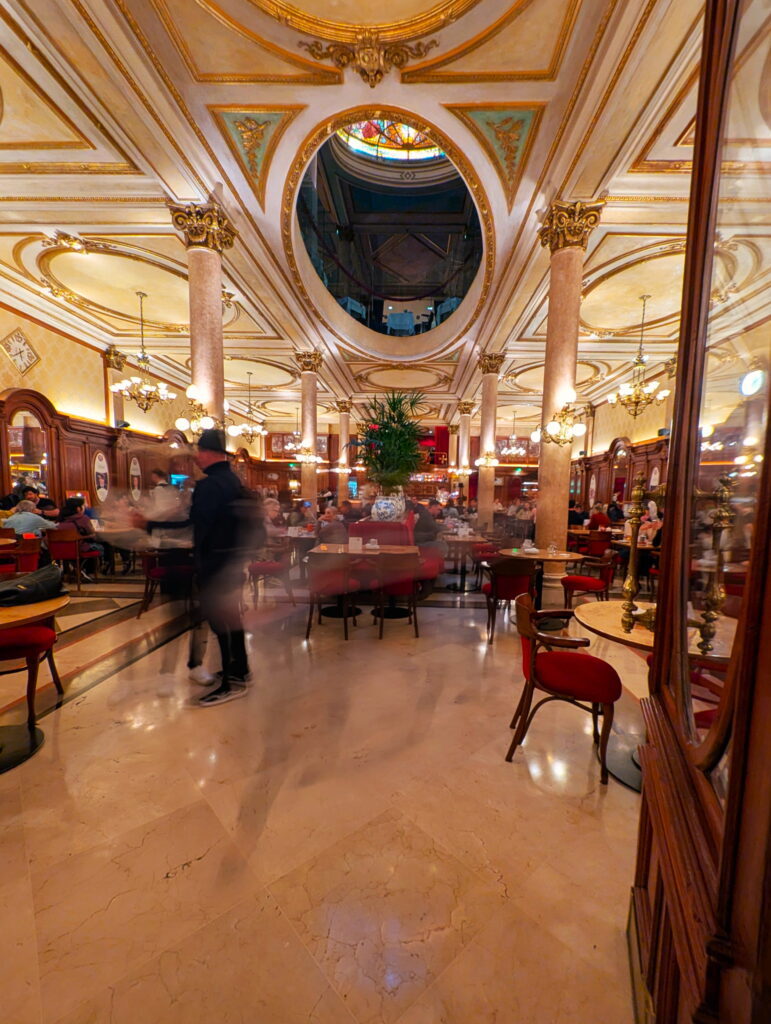
We were getting closer to coffee now. Honestly, we were. But then we passed Confitería Ideal, a legendary café and artisan chocolate shop, and it would have been criminal not to step inside.
The exterior was gorgeous, but the inside was an absolute masterpiece. It features a stunning Victorian-style interior complete with ornate gold detailing, marble floors patterned with fleurs-de-lis, and a soaring stained-glass ceiling.
To the right sat a chocolate counter where sweets were displayed in glass cabinets like fine jewellery. Trust me, I know chocolate. I’ve been to Belgium, so I consider myself a bit of an expert. They had dark chocolates stamped with tiny Cogsworth clocks from Beauty and the Beast, chocolate roses, miniature books, and even a massive chocolate Garfield.
It was beautiful, but we still hadn’t had an actual coffee.
Street Tango & The Search for a United Shirt
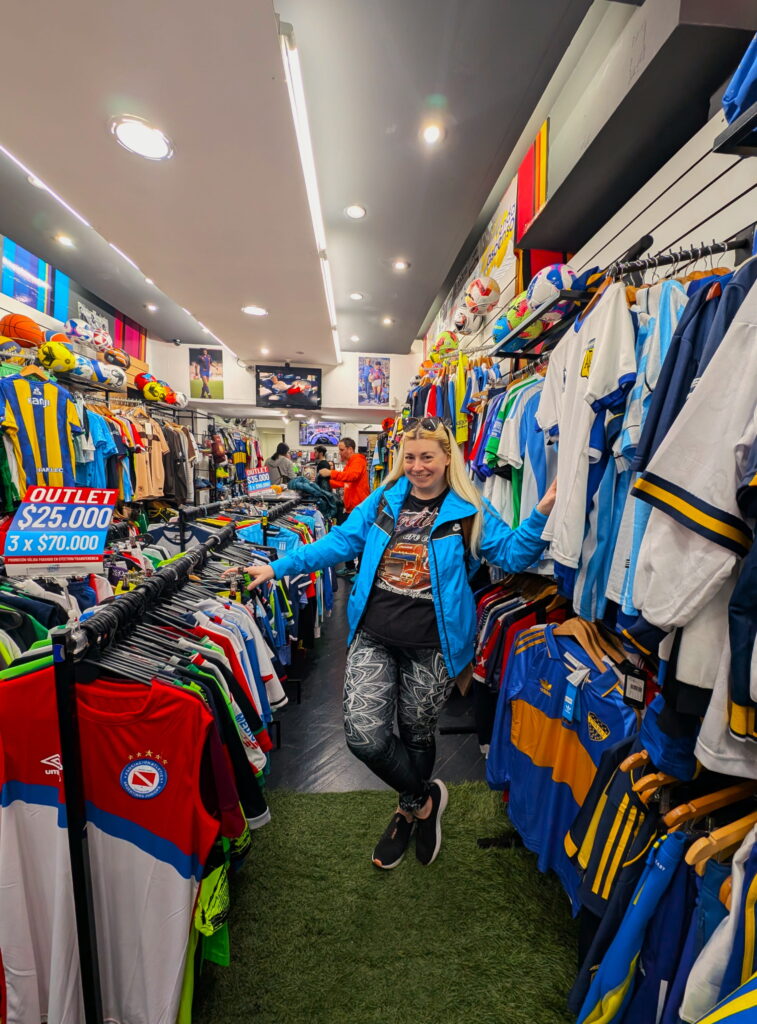
Right outside the shop, a street tango guide was painted directly onto the pavement, so naturally, I had to try out the steps. A few paces later, I spotted a vintage football shirt shop, and all logical progress completely halted.
Before the group could stop me, I was halfway through the door. It was an incredibly cool store packed with kits from all over the globe. Lorenzo very kindly asked the clerk if they had any Manchester United shirts for me. I was genuinely tempted to buy one but managed to display some rare self-control.
While browsing, one of the shop assistants smirked and asked, “What’s going on with your goalkeeper?” He was mocking United’s keeper at the time, who had a bit of a reputation for spectacular blunders. It never ceases to amaze me how football creates an instant connection with total strangers anywhere in the world.
Finally… Café Tortoni
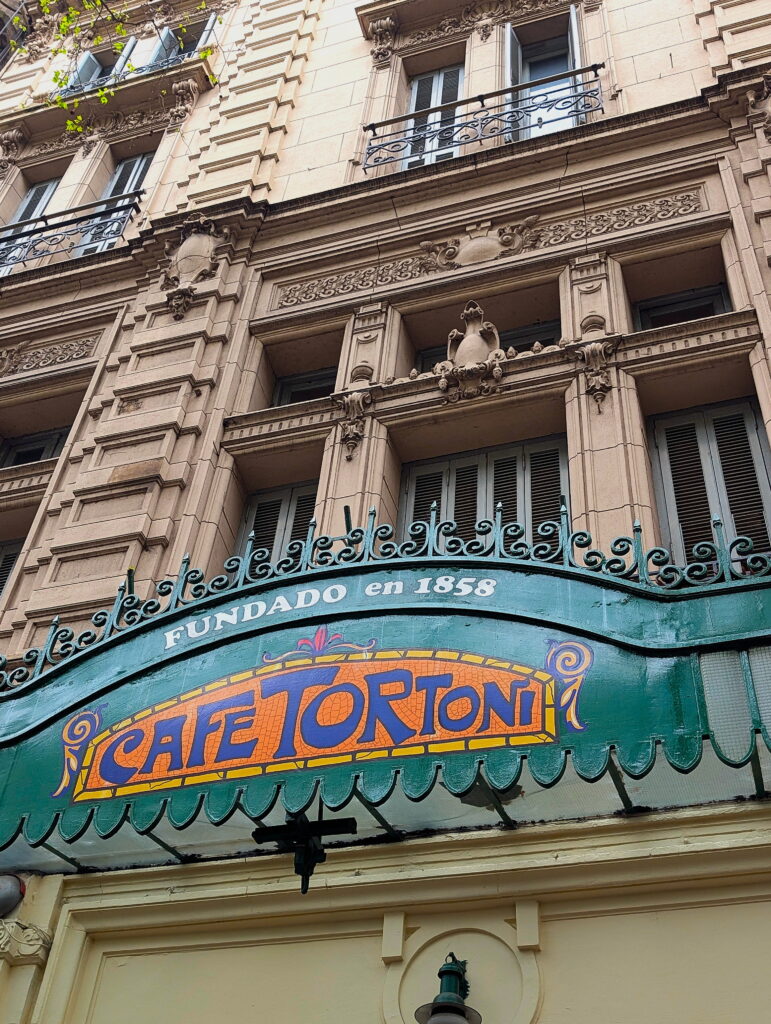
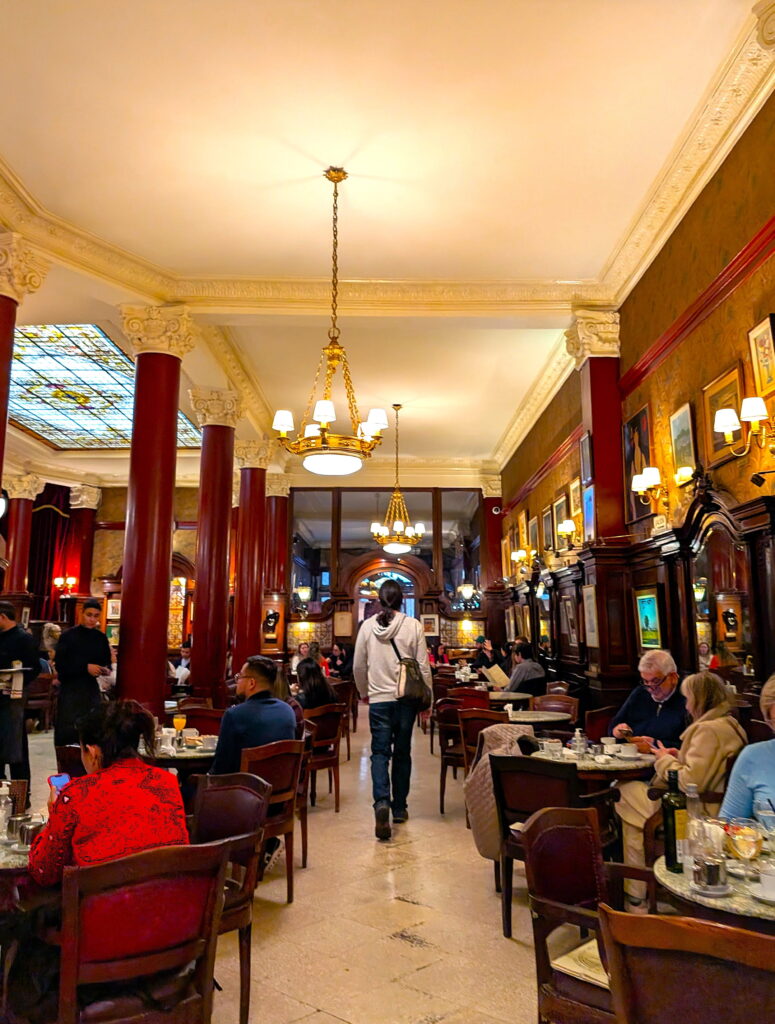
About 15 minutes later, we finally arrived at Café Tortoni. Established in 1858, it is the oldest and most iconic café in Buenos Aires. Unsurprisingly, there was a massive queue stretching down the pavement. Because you aren’t allowed to wait inside, we stood out in the freezing wind. It always feels ten times colder when you’re hungry, and I found myself daydreaming about the warm chocolate room back at Confitería Ideal!
Forty minutes later, we were ushered inside, and it was absolutely worth the wait. Stepping into Tortoni feels like entering a time capsule, with its low mahogany tables, dark wood panelling, and magnificent Tiffany style-stained glass.
I ordered a latte alongside a plate of fresh churros. Some of the girls ordered the traditional submarino hot chocolate. It arrives as a tall glass of steaming milk with a solid, submarine-shaped bar of dark chocolate on the side. You drop the submarine into the milk and stir until it melts into a rich, decadent drink. I had massive food envy watching them mix theirs, but my latte was excellent.
Want to experience Cafe Tornoni for yourself? Check availability here.
Exploring the Metropolitan Cathedral
Defeated by caffeine and sugar, we walked over to Plaza de Mayo. The surrounding colonial and Gothic Revival architecture looked so completely European that I genuinely felt like I’d been transported straight to Paris.
At the edge of the square sits the Buenos Aires Metropolitan Cathedral. The exterior features a grand neoclassical facade that looks almost identical to the Pantheon in Rome.
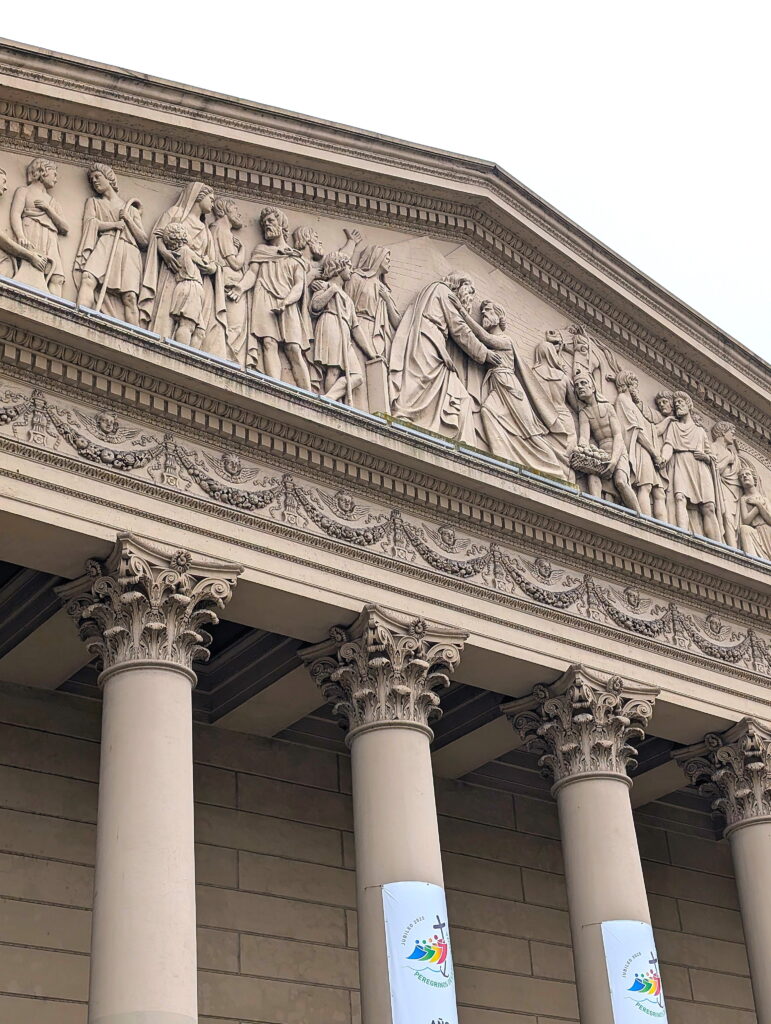
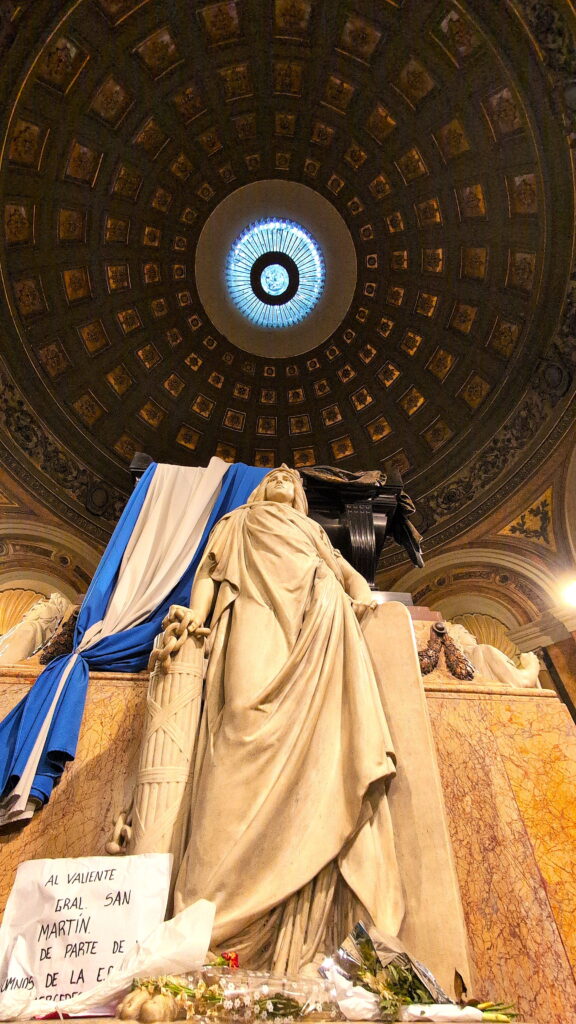
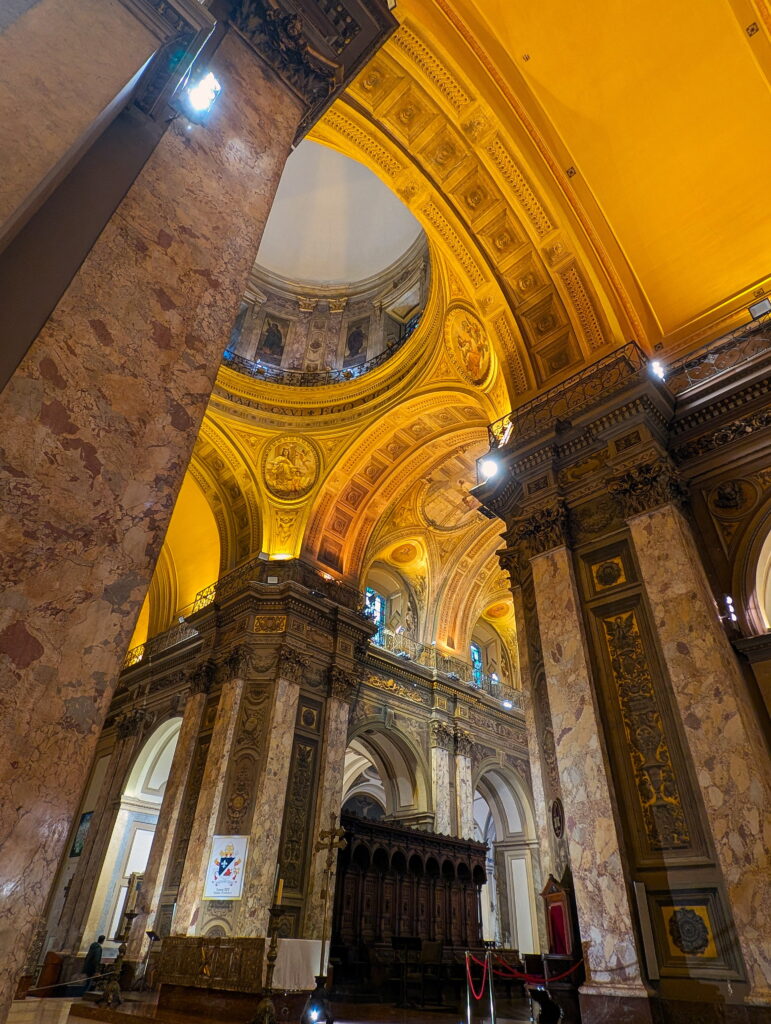
While I initially hurried inside just to escape the winter chill, the interior completely took my breath away. Intricate, patterned tile floors led the way toward a towering altar where a statue of the Virgin Mary stands wrapped in a gold robe. The walls are made of deeply veined marble, and the vaulted ceilings are covered in stunning biblical frescoes. This is the very cathedral where Pope Francis used to lead Mass before moving to the Vatican, and it houses a small museum dedicated to his life.
Lorenzo led us first to the solemn mausoleum of General José de San Martín, the legendary military leader who helped liberate Argentina, Chile, and Peru from Spanish rule. Armed soldiers stand guard at the entrance to the tomb, creating a powerful, quiet atmosphere.
Painted Handkerchiefs & The Pink House
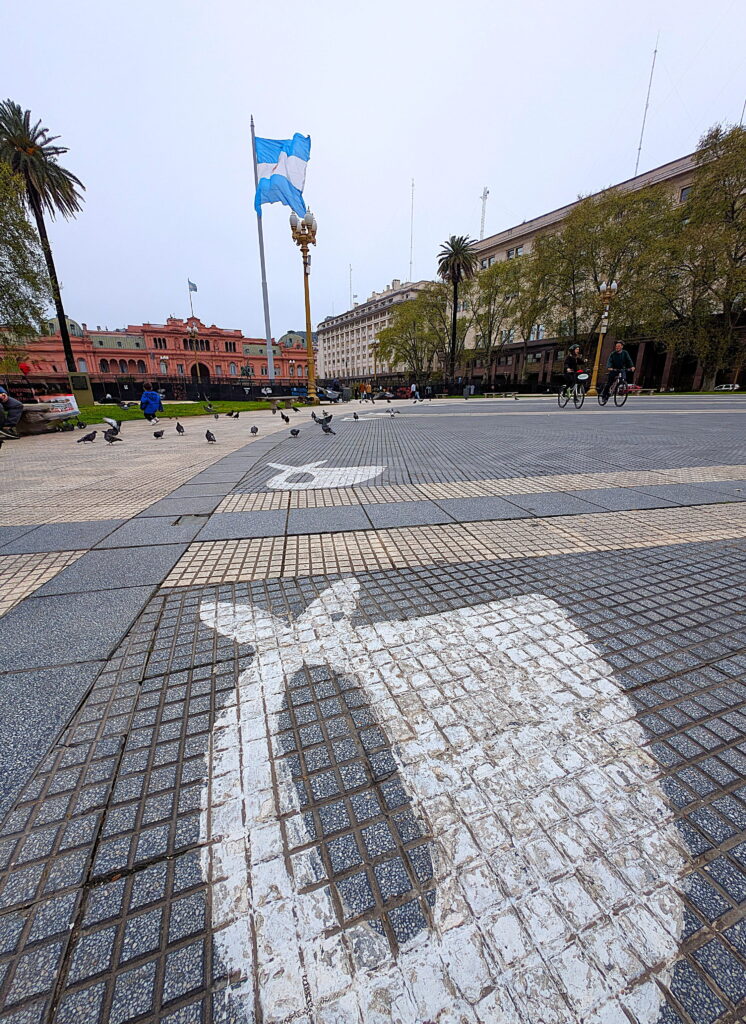
Back out in the centre of Plaza de Mayo, Lorenzo pointed out a detail on the pavement that I easily would have missed: white handkerchiefs painted directly onto the ground. These symbols mark the exact spot where the Mothers of the Plaza de Mayo still gather every single week to demand justice for their children who vanished during the military dictatorship.
Just in front of the central flagpole stood a row of colourful riot shields, serving as a stark reminder of the city’s active political landscape. Around the base of the flagpole, rows of small stones and photographs were encased in glass. A moving memorial left by families during the pandemic. One photo showed a father and daughter, alongside the heartbreaking phrase: “Hasta el Último Suspiro Tengo mis Derechos” (Until my last breath, I have my rights).
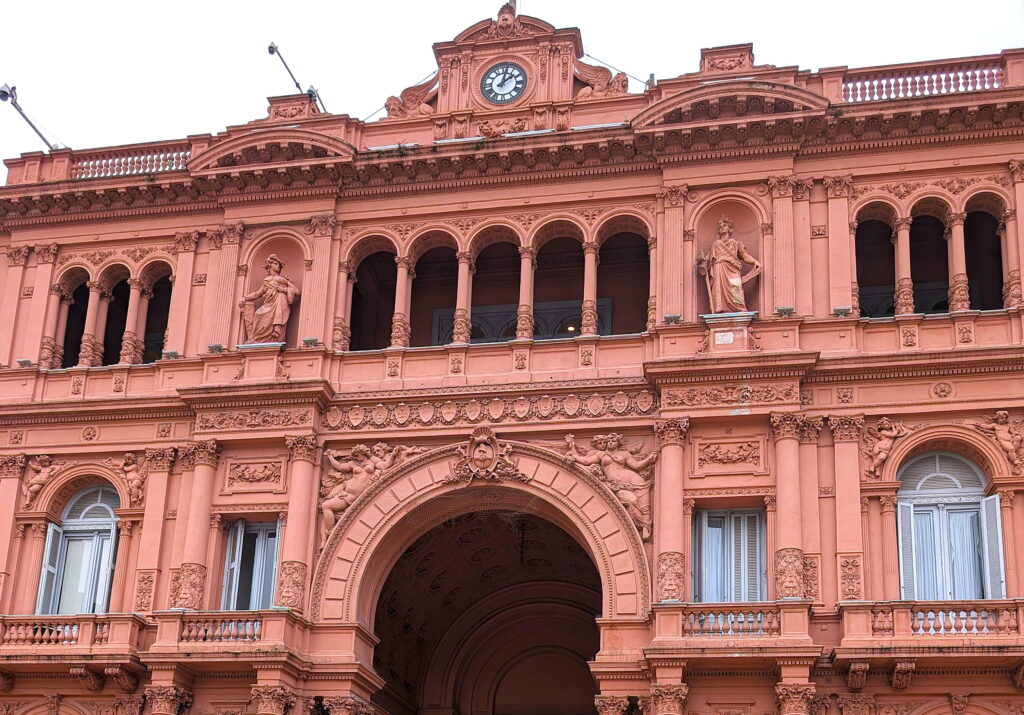
Turning around, we faced the famous Casa Rosada (The Pink House). While it sits at just three stories tall, its distinctive pale pink facade makes it instantly recognisable. This is the executive mansion of the President, famous worldwide for the balcony where Eva Perón delivered her iconic speeches to the masses.
Meeting Mafalda & My “Hand of God” Moment
From the palace, we began walking toward the historic neighbourhood of San Telmo. The wide boulevards quickly narrowed into cobblestone alleys, giving the area a distinctly artistic, old-world energy.
Along the way, we encountered a massive queue of locals waiting to take a photo with a small, cartoon statue of a little girl sitting on a bench. Lorenzo introduced her as Mafalda, a massive cultural icon in Argentina. Created by cartoonist Quino in 1964, Mafalda is a fiercely intelligent, outspoken six-year-old who used comic strips to mirror society, critique international politics, and plead for world peace. She became an unshakeable symbol of Argentine identity during a highly turbulent political era.
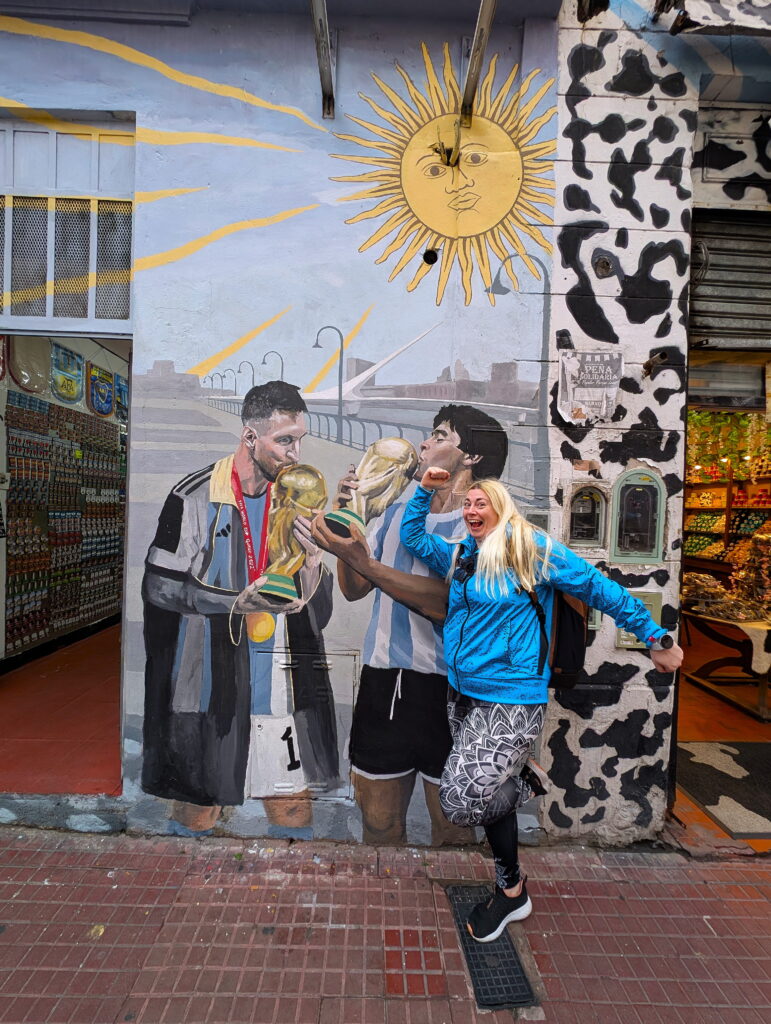
Just a few doors down from Mafalda, I spotted a massive street mural depicting Lionel Messi and Diego Maradona side-by-side, each cradling their respective 2022 and 1986 World Cup trophies.
As a Brit, I couldn’t look at Maradona without thinking of his infamous “Hand of God” goal that knocked England out of the ’86 World Cup. With no VAR (Video Assistant Referee) back then, his sneaky handball stood as a legitimate goal. Naturally, I couldn’t resist, as I lined up in front of the mural and posed for a photo doing my very own “Hand of God” celebration.
Posing complete, our appetites were well and truly back as we finally arrived at the entrance of the vibrant San Telmo Market, an absolute must-visit if you are planning 3 days in Buenos Aires.
A Feast and Flavours at San Telmo Market
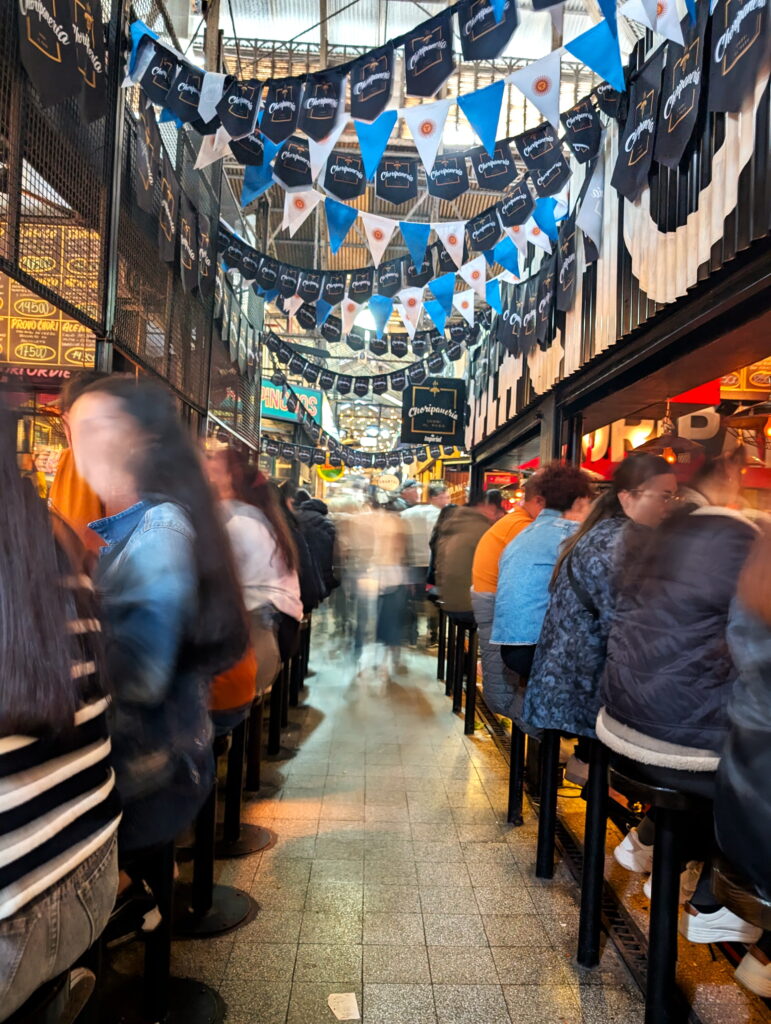
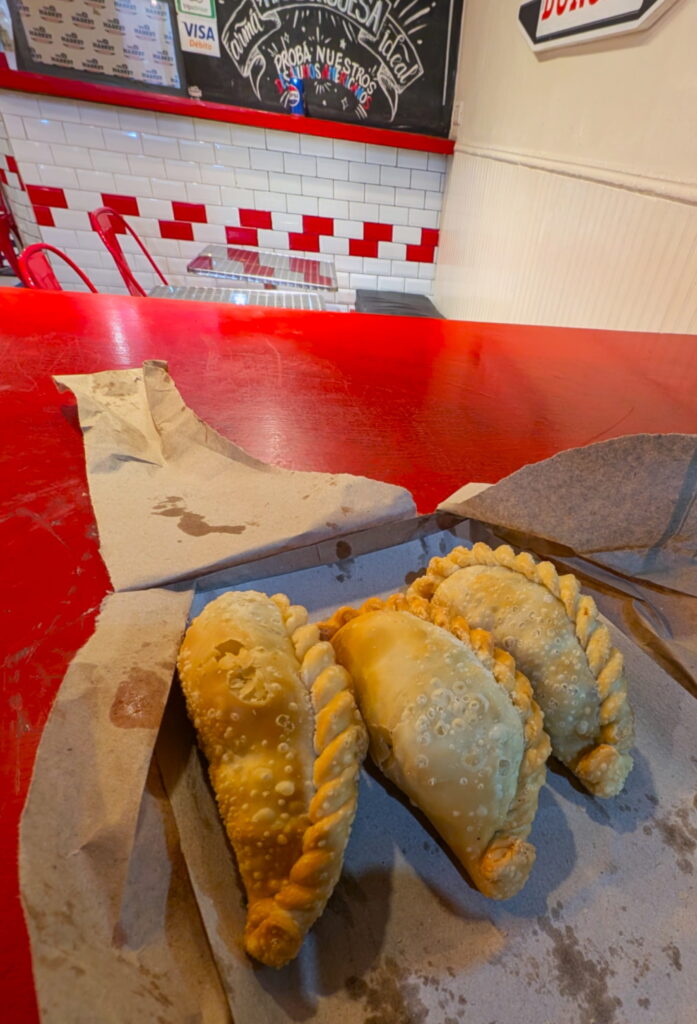
We stepped into the beautiful, Victorian-style arcade of San Telmo Market, surrounded by intricate overhead ironwork and unmistakable old-world charm. Inside, small stools line the narrow aisles, framing an eclectic mix of local food stalls. Lorenzo took charge and disappeared to order a spread for us to share.
First up was a traditional Argentine empanada, packed with seasoned beef and vegetables. It was simple, rustic, and absolutely delicious. Next came a classic choripán, a juicy, grilled chorizo sausage sliced down the middle and served in a crusty baguette. I’ll be honest, I wasn’t expecting a simple sausage sandwich to blow me away, but it completely redefined my standards for street food. Argentina absolutely knows how to handle chorizo.
By the time we finished eating, it was around 3:00 p.m., and the market was still absolutely packed. Coming from Australia, where cafés and markets usually wind down by mid-afternoon, it was refreshing to see the local culture still operating in full swing.
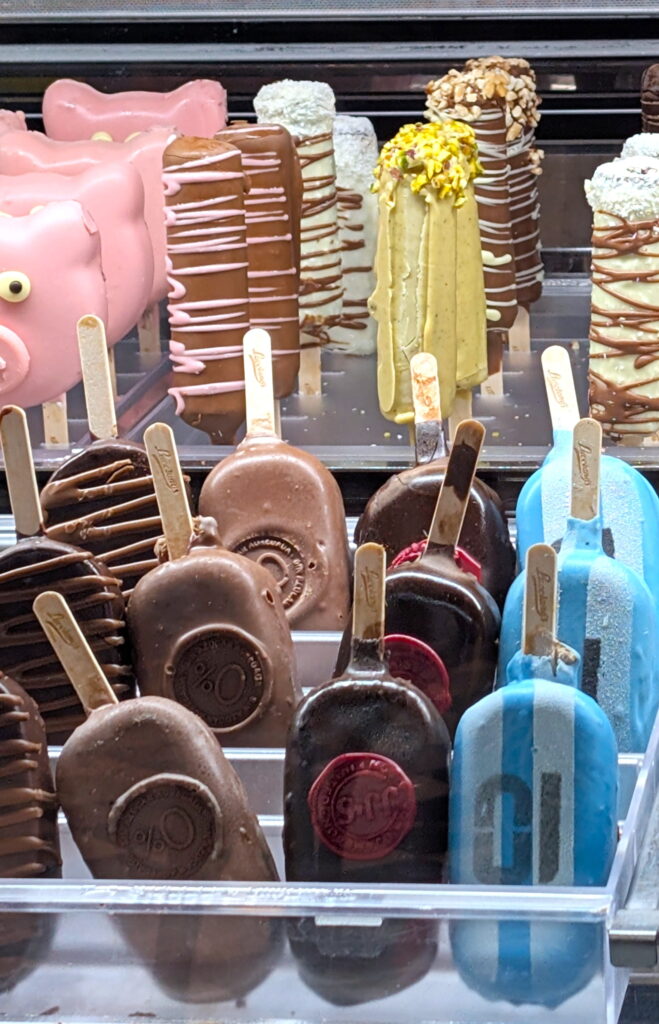
Despite being completely full, none of us could resist the massive queue snaking out the door of Rapa Nui, a legendary local ice cream shop. They were even scooping a vibrant, Messi-themed gelato dyed in the sky-blue and white colours of the Argentine flag. The ice cream was incredible, but it officially pushed us all into a serious food coma.
El Ateneo Grand Splendid: A Theatre of Books
Our final stop on the Buenos Aires city tour was a place one of the other agents had mentioned earlier in the day, a beautiful old theatre that had been converted into a bookstore. As soon as she described it, I was in. I love books, so a few of us decided to head over and check it out.
It’s called El Ateneo Grand Splendid, located on a busy street in the Recoleta area. From the outside, it doesn’t give much away. In fact, it just looks like a fairly standard bookshop.
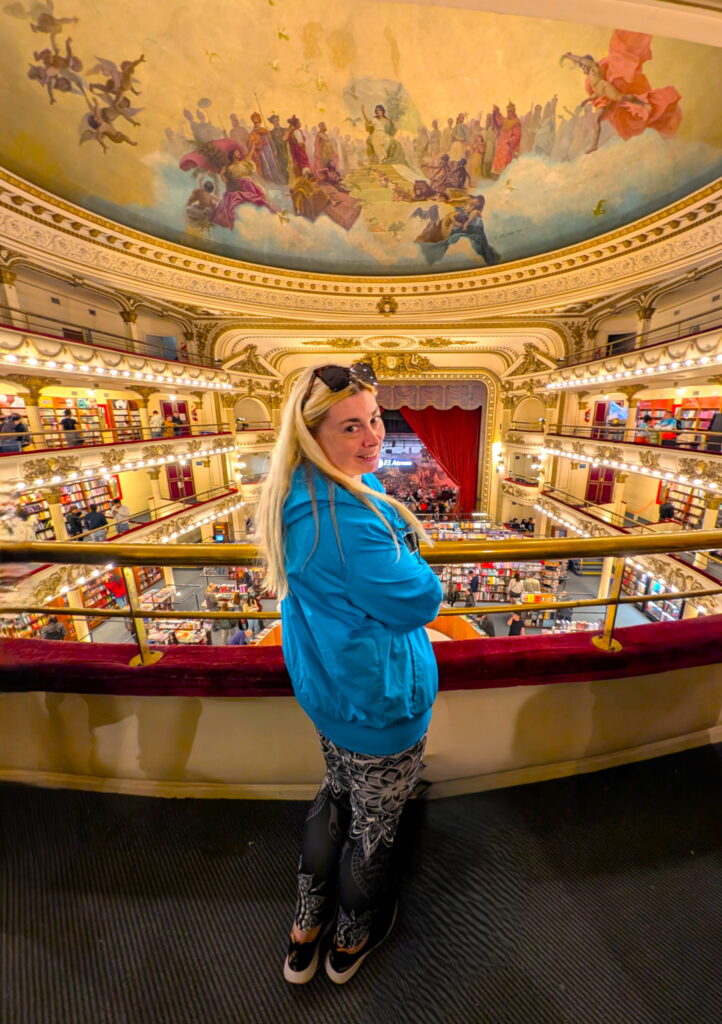
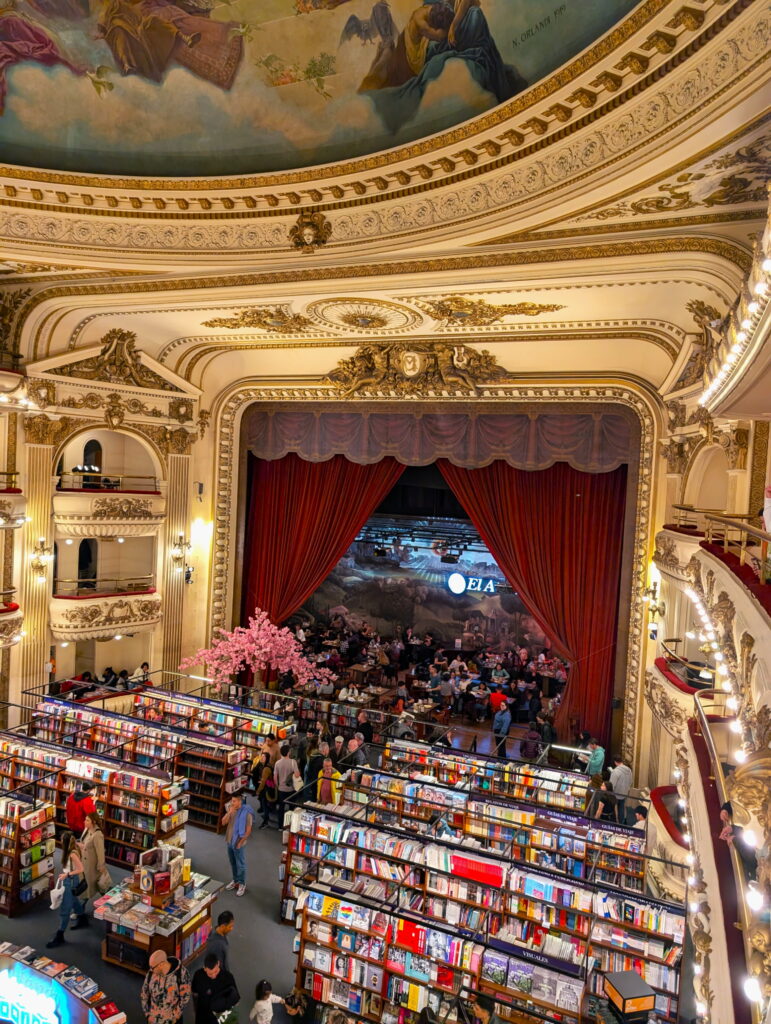
But the moment you step inside, you realise it’s something completely different. You can still see the original theatre details if you look closely, but the real showstopper is upstairs. From the balcony level, you can look out over where the theatre seating once was, now filled with rows upon rows of books. It’s honestly stunning.
The original ceiling is still intact, beautifully detailed and incredibly well preserved. Even the old stage has been transformed into a small café, softly lit and full of atmosphere. Most of the books are in Spanish, with a very small English section tucked away upstairs, but honestly, this is a place you don’t really need to “read”—you just take it in. Afterwards, we were all completely exhausted, but in the best way. It had been an incredible start to our 3 days in Buenos Aires with a great group and an amazing guide, and as we headed back to the hotel, we were tired but content.
The Best Meal of My Life: Finding Fogón Asado
That evening, I faced the classic traveller’s dilemma: I briefly considered staying in my hotel room to order room service and watch Netflix. But it was my very first night in Argentina, and skipping out would have been the worst culinary mistake of my life.
We arrived on a cool, alternative street covered in vibrant murals and hidden bars, searching for a restaurant called Fogón Asado. It’s an exclusive, word-of-mouth spot with no flashy signage, just a tiny, understated plaque on the wall. We rang the doorbell and waited, feeling less like patrons entering a restaurant and more like guests arriving at a private home.
Once inside, we were led upstairs to a spectacular dining space. A massive, open brick kitchen sits directly in the centre of the room, surrounded by a sleek wooden bar where guests are seated. The lighting is low and intimate, cast almost entirely by the glowing embers of a massive wood-fired oven.
The 10-Course Asado Experience
Over a welcome cocktail, the chefs introduced the evening’s concept and presented the premium cuts of meat. I glanced at the multi-course menu and quietly prayed the portions would be manageable.
The meal kicked off with ember-roasted eggplant served with fresh ricotta and herbs, an unexpected, flavour-packed start. Next came grilled provolone cheese topped with sweet pears and a sweet Torrontés wine reduction, which completely blew my mind.
Each course was meticulously paired with local boutique wines. Because we were heading to the Mendoza wine regions later in the trip, this felt like my unofficial initiation. The first two pours didn’t quite hit the mark for me, but Lorenzo refused to let me give up. As the third glass was poured, he slid it over with a grin: “Third time’s a charm.” He was right. From that point on, the wine flowed perfectly with the rhythm of the meal.
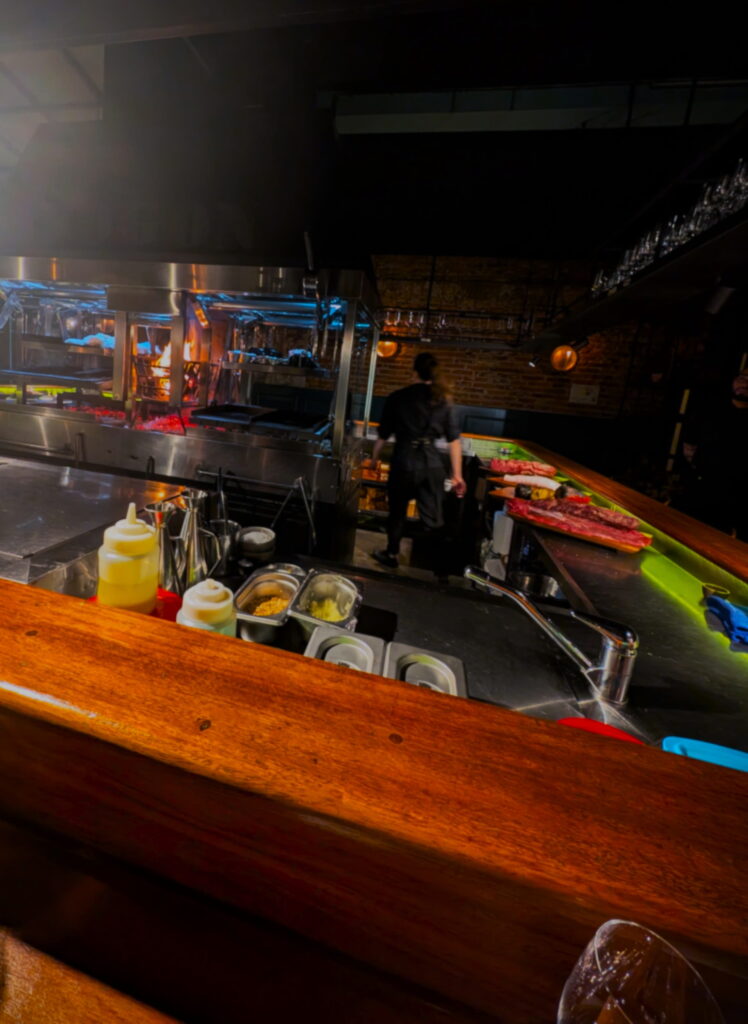
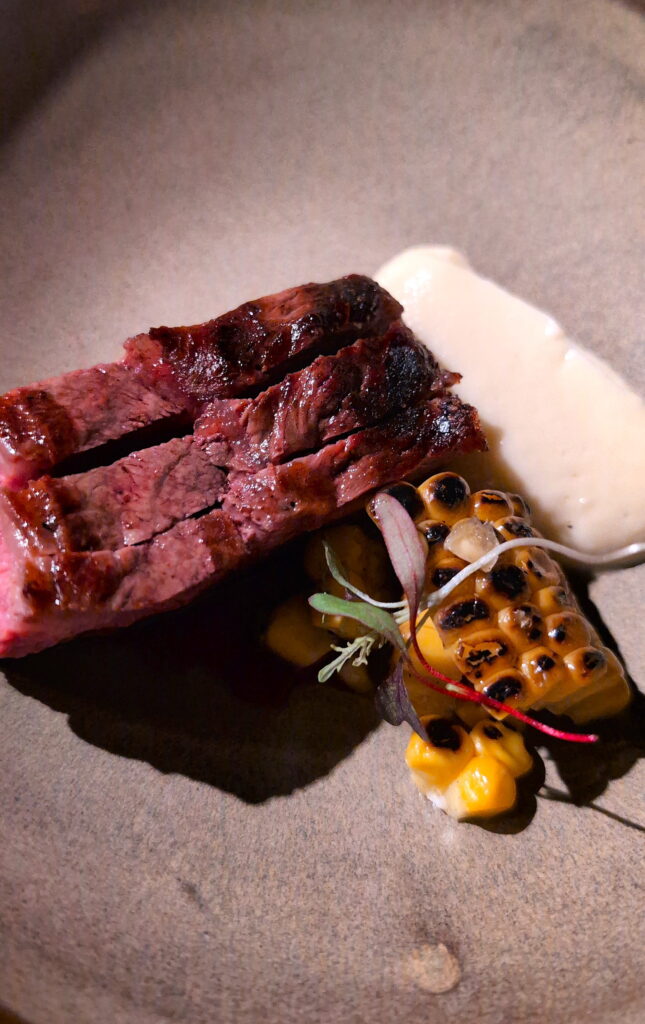
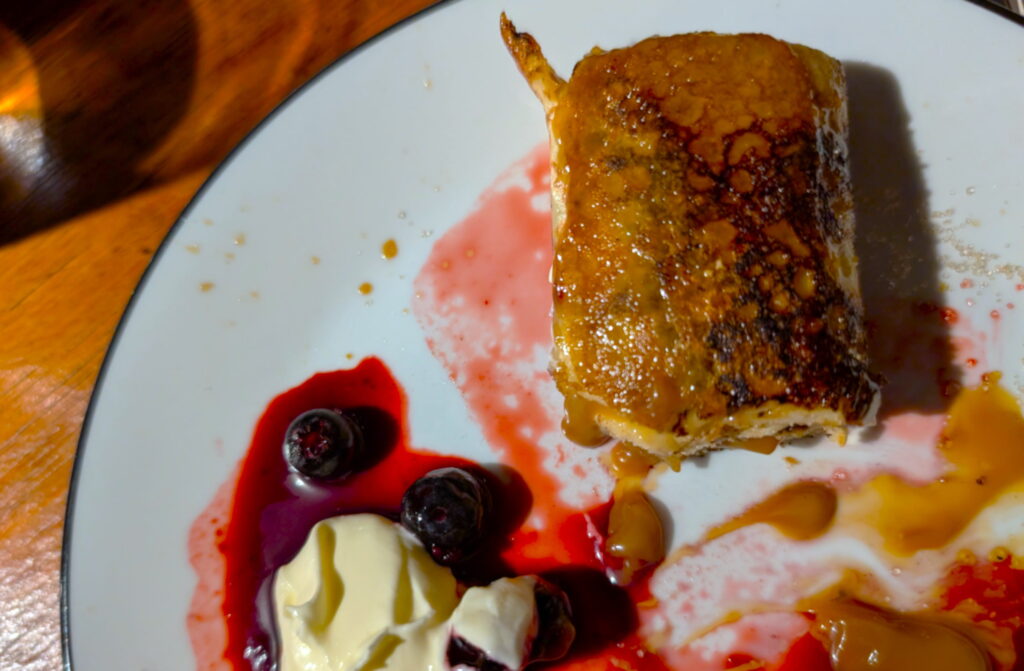
Course after course arrived from the flames: tender pork belly, rich flank steak, and even the gullet, which tasted far better than I anticipated. But the true star was the signature ribeye. It was perfectly charred on the outside and literally melted in my mouth, without question the single best steak I have ever eaten.
We finished the night thoroughly full, happy, and delightfully tipsy, capping the experience with thin crepes loaded with dulce de leche and whipped cream, paired with a rich dessert wine.
Want to book your Fogan Asado Experience? Book yours right HERE.
Midnight Aftermath
We finally stumbled back to the hotel just before 11:00 p.m., exhausted but completely buzzing from the day. I crashed into bed and fell asleep instantly.
The next morning, my roommate gently informed me that I had spent the night snoring so loudly she had actively considered deploying a pillow as a tactical solution. Apparently, when I am tired and have had a few glasses of Argentine Malbec, I sound exactly like a chainsaw. I’m choosing to take that as the ultimate sign of a successful first day.
Final Thoughts: Demolishing Expectations
What an incredible start to my 3 days in Buenos Aires. The city is a beautiful study in contrast and character, from the historic political gravity of the Ni olvido ni perdón mural to the pure euphoria of the Obelisk,
There were plenty of football highlights too, from World Cup memories flooding back at the Obelisk to spotting an England shirt in the middle of Buenos Aires, and my very questionable “Hand of God” moment in front of a Maradona mural.
More than anything, this first day completely shattered my preconceptions. Like many people who haven’t visited South America, I had absorbed various warnings about safety and security. Yet, walking through the diverse neighbourhoods of Buenos Aires, I never once felt unsafe. Instead, I felt completely at ease and genuinely welcomed by the locals. It was a powerful reminder that travel often replaces distant stereotypes with human, nuanced reality.
If I had to pick highlights, the cathedral was breathtaking, San Telmo Market was a standout for food, Casa Rosada was iconic, and Ni olvido ni perdón really stayed with me. But mostly, it was the feeling of Buenos Aires itself, a city full of energy, history, and surprise at every turn.
If you enjoyed this look at my 3 days in Buenos Aires, make sure to subscribe below so you don’t miss Part Two of my Argentine adventure!

Have you visited Buenos Aires before? Are you planning on a trip here on your next visit? Let me know in the comments section below.
Ready to experience the magic, the history, and the steak of Argentina’s capital for yourself? [Browse and book the best local Buenos Aires tours right here.]